What a Circuit Breaker Means When Korean Stocks Sell Off Fast
A circuit breaker often appears in Korean market headlines when stocks drop sharply. Understanding why trading stops, how the KOSPI and KOSDAQ thresholds work, and how it differs from a sidecar can make panic-driven news easier to read.
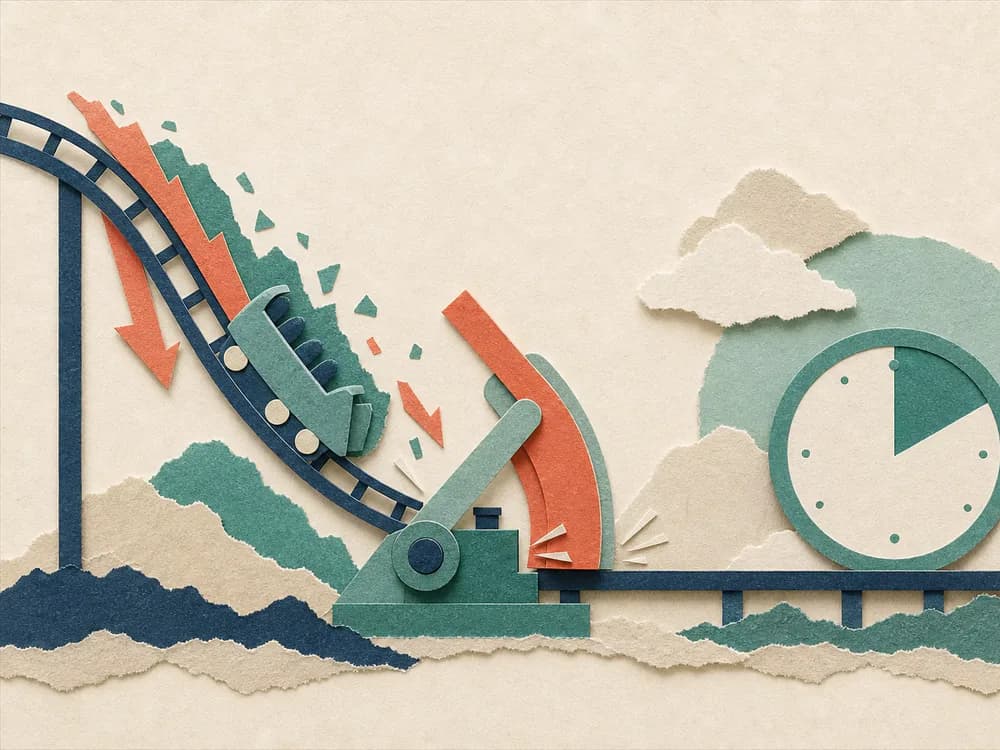
When Korean market headlines mention a circuit breaker, they are referring to a safeguard that temporarily stops trading across the market when prices fall too fast. It is not designed to prevent losses or signal an immediate rebound. Its main purpose is to slow the pace of a disorderly sell-off so investors have time to review information and order flow.
For readers following Korean stocks, the circuit breaker is one of the most important terms to understand during a sharp decline. It tells you that the market is moving so violently that the exchange has stepped in to pause trading and reduce panic-driven reactions.
How the circuit breaker works in Korea
In Korea, the exchange applies the circuit breaker to the main stock indices, including KOSPI and KOSDAQ. The trigger is based on how far the index has fallen from the previous day’s close, and the market has a brief window to confirm that the drop is not just a momentary swing.
The thresholds are staged:
| Stage | Trigger | What happens |
|---|---|---|
| 1st stage | Index falls 8% or more from the prior close | Trading stops for 20 minutes, then resumes with a 10-minute call auction |
| 2nd stage | Index falls 15% or more, with an additional 1 percentage point decline from the first stage | Trading stops for 20 minutes, then resumes with a 10-minute call auction |
| 3rd stage | Index falls 20% or more, with an additional 1 percentage point decline from the second stage | Trading ends for the day |
The 20-minute pause is meant to cool the market. After that, the 10-minute call auction period helps reopen trading in an orderly way by matching orders at a single price rather than letting every trade print all at once.
During the first two stages, new orders cannot be entered while trading is halted, but existing orders can still be canceled. In the third stage, the rules become stricter and even order submission, including cancellations, is restricted as the market closes for the day.
Circuit breaker vs. sidecar: they are not the same thing
A common source of confusion in Korean market news is the difference between a circuit breaker and a sidecar.
A circuit breaker applies to the entire market. It is a broad emergency pause used when the index itself drops too sharply.
A sidecar, by contrast, is a rule tied to program trading, usually when futures prices move too violently. In that case, the exchange restricts program order quotes for a short period so automated trading does not add fuel to the move.
A simple way to think about it:
- Circuit breaker = market-wide trading pause
- Sidecar = temporary brake on program trading
If you are reading a news headline quickly, that difference matters. One is about the whole market freezing briefly. The other is about limiting a specific type of trading activity.
Why the market pauses instead of just letting it fall
A fast sell-off can become self-reinforcing. When investors all try to sell at once, prices can move more on fear than on fundamentals. In that kind of environment, a trading pause can help reduce disorder and give everyone a short break to reassess the situation.
That does not mean the market is “safe” once the pause ends. It only means the exchange has tried to slow the pace of the move so prices can be discovered more cleanly.
For beginner investors, the most useful reaction is not to treat a circuit breaker as a buy signal or a disaster signal by itself. It is better understood as evidence that the market is under stress and that the cause of the drop deserves a closer look.
What investors should check during a sharp decline
On a day when a circuit breaker is triggered, the key question is usually not “What should I do immediately?” but “What is driving the sell-off?”
A few practical questions help frame the news:
- Is the drop driven by a local issue in Korea, or by a global move in stocks, rates, or the won-dollar exchange rate?
- Is my holding falling because the whole market is under pressure, or because the company itself has a separate problem?
- Does my account use margin, credit, or other leverage that could make a sharp drop more painful?
That last point matters because a trading halt does not reduce account risk. It only buys time. If a portfolio is highly leveraged, the bigger issue may be forced selling or margin pressure once trading resumes.
Reading Korean market headlines more calmly
In Korean news, circuit breaker headlines often appear alongside terms like KOSPI, KOSDAQ, foreign net buying, or sidecar. You do not need to memorize a full glossary, but it helps to know the basic structure:
- KOSPI is Korea’s main large-cap stock index.
- KOSDAQ is the smaller-growth and tech-oriented market.
- A circuit breaker is a market-wide stop.
- A sidecar is a narrower control on program trading.
Once you separate those ideas, a dramatic headline becomes easier to read. Instead of assuming the market is collapsing permanently, you can focus on what triggered the move, how deep it is, and whether the event is broad-based or limited to one part of the market.
A circuit breaker is best seen as a pause button, not a forecast. It does not tell you where prices will go next. It simply tells you the market has moved fast enough that the exchange has stepped in to slow things down.
Continue reading
- 01
- 02
- 03